5 Ways to Stop Self Harm

My name is Brooklyn. I’m a fur mom of 4, a sister, a girlfriend, and I am a survivor. I live with BPD, MDD, PTSD, ADHD, and Social AD. I am what others would consider “high functioning,” whatever that means. 

I work in a substance abuse rehabilitation center for women and children. I am about to graduate with a bachelor’s in psychology with an undecided career, and I enjoy taking my family on hikes. 

Historically I’ve used addictions and self-harm to cope, but am on the road to bettering myself, and I hope to inspire others to do the same.

So, how do you stop self-harm? 

I realized that even though Google will give you a million ideas, it’s all superficial if it doesn’t serve the purpose you need in the moment. The struggle is that everyone is different, and there are many different reasons people turn to self-harm. I personally have a timeline of reasons, from low self-love and high self-blame, to my disorders leading to impulsive behavior, even in good moods. 

It started in high school as a way to hurt my stepmom. With no voice, I used food and self-harm to have some control, but the ‘bad habits’ went away as I moved out and began to be an adult. Growing quite depressed in adulthood, I began having urges that did not make sense. Adult trauma stepped in again and I thought to myself, “This worked in high school, maybe it’ll help”… There was a time when it didn’t, before things got worse. Then like a switch, it connected.  

From there, it became its own addiction, my way of coping, no matter how minor the problem. It became the thing I thought about all day long, prepared for, and leaned on. For a little over a year, I did this almost daily, sometimes multiple times a day, sometimes lying next to the people who wanted to support me. By the end, I had so many pink lines across my body, I hated the image I saw in the mirror, but it still felt right.

Despite that, I told myself I was ready to quit, but as addictions go, it wasn’t that simple. I’d get almost a month self-harm free, then I’d get scared that I was losing my coping skill. This continued until I finally made it to almost a year self-harm free, but the weight of it all, the pressure that made me feel, brought me back. 

It’s been two years since then and I’ve been doing pretty well. I started to be open to my younger siblings about it, and they opened up about all the traumas they have experienced in their young lives, and their own experiences with self-harm.

That was it. That was the moment for me that I knew I had to work on recovery from self-harm, so that I could be that light that shows my little sisters that there are better ways. I’ve had lapses since then, even recently, but I still do the things that I need to in order to respect my body and find other options.

For many, in early stages of recovery, there is this feeling that safety is unsafe. The unsafety feels uncontrollable. Self-harm gives the illusion that there is control.  For those of you who don’t understand or have never been able to label your experiences, there’s a feeling you begin to have as a newly recovered person.

The Substance Abuse and Mental Health Services Administration, or “SAMHSA” has my favorite definition of recovery: “A process of change through which individuals improve their health and wellness, live a self-directed life, and strive to reach their full potential.” 

We all know that change is big and scary and stressful, even if it’s for the better. Because we all understand that as human beings, we all understand the feeling that safety can sometimes feel unsafe. 

There’s a lot more to it, as it also has to do with your biological makeup that has been changed by traumas, but that’s for another time.

So, how do we learn to respect ourselves and our bodies and truly take on new coping skills? Here is what I have learned…

1. Find trusted professionals that will have the conversation with you. This could be anybody that listens to you and makes you feel validated, like a trusted friend or family member, therapist, psychiatrist or doctor, a teacher or family counselor, a trained professional hotline worker, or in group therapy. Whatever environment you feel safe in. Dive deep into the ‘benefits’ that you feel when turning to self-harm. What are the physical things happening in your body? Figure out what your most extreme feelings/motivators are, and what your fears are regarding making the changes. 

2. Mental distractions and recognizing when to use them can be beneficial to reducing self-harm urges such as, in times of crisis, self-loathing, and isolation. Some things you can explore for distractions include spending time with family and friends, whether they know how you are feeling or not, texting or calling a crisis hotline, looking at a list of your hobbies, and doing things that make YOU happy. For me, the hardest, yet most likely successful thing is to go to my trusted person and tell them, “I feel like hiding from you so that I can self-harm and my brain feels consumed by it, but I’m not ready to talk about it.” Sometimes that person is available, and we do any and everything to distract ourselves. We sit across the room and play ball, make weird jokes, cuddle up and watch our favorite cartoons, make supper together, and put on Good Mythical Morning because I know I’ll laugh. Other times they’re not available, and that’s okay too. Using a DBT technique called “Acting Opposite” helps. I go to my list of things I enjoy doing like tracing, painting, and hiking and I do those with positive affirmations. When I’m struggling to reach out to my loved ones who support me, I text the hotline 741-741. They will have somebody message you until you can promise to be safe. For this, I suggest getting real with yourself about things that work and things that don’t. When you find the things that work, keep a physical copy of that list. When your head is distracted by the intense emotion, you’re not going to be thinking about all the things you enjoy. So, take the stress out of it and have a pre-written list, and just try everything. 

3. Find a physical distraction that works for you. Some examples include exercising, holding ice cubes, snapping ponytails, writing positive words in sharpies, or even writing lines where you would like to cut in red sharpie, which can all physically distract the nervous system’s urges. Find little ways to physically release the aggression like playing tug-of-war with your dog or finding an open place to throw rocks or sticks or yelling into the universe. Sometimes when I feel like the scars, I do have are not valid enough I trace them bring them to life with a pink Sharpie, and though I don’t love the amount of pain and stress I’ve put on my body it helps take the urge away and remind me that every feeling I have is valid and it’s about how I choose to respond.

4. Press pause and make lists/journal entries about the people you love and admire and why you admire them. Write about happy memories, or what you might tell a friend who was struggling the way you are currently. 

5. Be honest with someone trusted around you. Tell them about your urges, and if you know why they are arising. Then, tell them you need company, and do what suits you best. That may be by either talking through the feelings with that trusted individual or distracting yourself with healthy coping skills with the person instead. After my most recent lapse, it felt harder to say no, so I informed my support system of what happened, and that alone helped me to act opposite.

At the end of the day, I could tell you all the cliché sounding fixes to these complex problems, but what works for me may not work for you. So, try it all! It doesn’t matter how silly you may feel, or if you try one and don’t like it. Even trying one skill is one step closer to finding out who you are and what you are trying to accomplish by using these maladaptive behaviors. Mental health, traumas, and addictions can change the way we view ourselves, and sometimes a person can feel as if they are not worth it, but you are. And with all of this, I want to remind you that the number one thing in any recovery is SELF FORGIVENESS; giving the compassion you give to others to yourself as well. 

–        Find me on Instagram at brooklyn_vaught or via email at morganbrooklyn323@gmail.com

–        Come share your comments, successes, and questions on my baby blog https://support-not-stigma.simplesite.com

National suicide prevention lifeline

 Available in English and Spanish 24/7 

Call 800-273-8255/ Text 741-741/ Or visit suicidepreventionlifeline.org
AmandaGrace’s Story

Growing up and having a small build I was regularly bullied and asked if I had an eating disorder. My response was always no; that I knew that there were other reasons to the way my body looked which included diet and medications as a young child. That was until November 3rd of 2018.

I had just received some earth shattering news and in the days following I walked through life in a daze. In order to combat the feelings that I was experiencing ,I started to work out in excess because if my heart was beating fast enough then it didn’t have the time to feel the emotions my brain was attempting to process. A family friend finally asked me if something was wrong.

As I looked in the mirror and saw the skeleton that looked back at me, I realized that I hadn’t been eating. I learned that in the midst of trauma or overwhelming stress, I use food as a coping mechanism because it is something that I can control when the world around me feels like it is caving in.

I have since sought out professional help in the form of a therapist, and I have a service dog who helps remind me when I need to eat and we eat our meals together (she loves it when we have eggs for breakfast because she gets some too). I am thankful for the people in my life who have walked alongside me on my path to recovery.  My journey back to a healthy weight has taken several years and a lot of work but for the first time in many years I am happy with the reflection I see in the mirror.

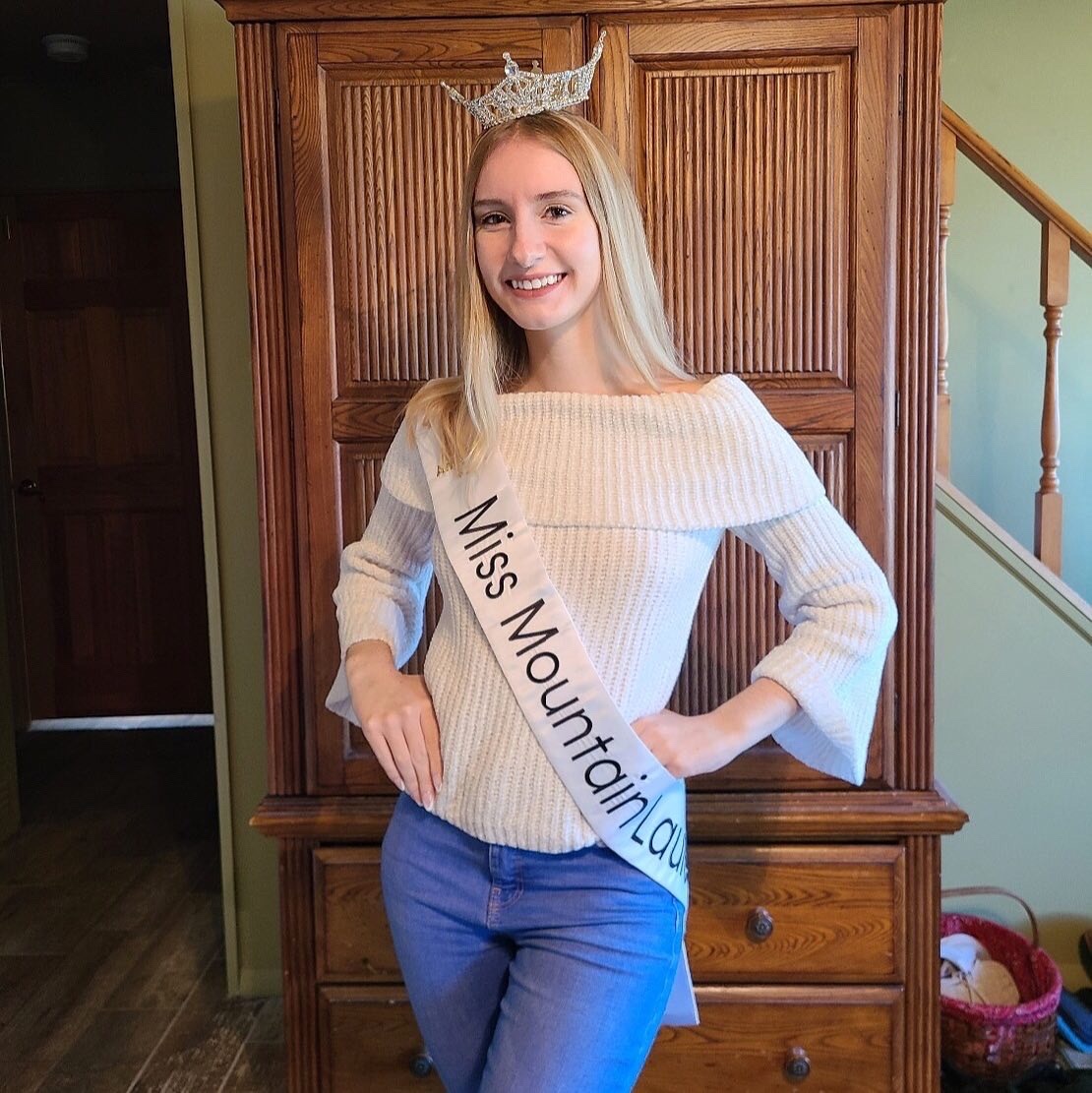
– AmandaGrace Krier, Miss Mountain Laurel

Kayla’s Story

Ever since I was a young child, I was very active, often running around the neighborhood and climbing trees. For this reason, my family often called me a “monkey”. Another nickname of mine was “bag of bones” since I was very thin; a characteristic that was likely exacerbated by the immense amount of physical activity I participated in. Despite my thinness, I would often consume large amounts of food correlated with my emotions. This would occur whenever I wanted to feel more positive emotions along with when I experienced stress or negative emotions. 

In 5th grade, my physical activity participation was put to a dramatic halt and emotional eating increased. I was forced to quit playing lacrosse after becoming physically sick for what appeared to be no reason. I suffered from severe stomach pains, headaches, extreme fatigue, and unexplained myalgia. During this period, I was going to doctor’s appointments on a weekly basis and was pulled out of school entirely. After a plethora of tests, one doctor asked about my home life and referred me to a therapist, determining the physical ailments were a result of chronic stress and trauma. Over time, the combination of therapy and my mother removing my sister and me from an abusive home life situation resulted in me feeling reinvigorated and healthy once again.  

As my physical health and mental health improved, I transitioned from a cyber school to a public school and joined the cheerleading team. Cheerleading reignited my passion for physical activity; however, it also triggered the development of an eating disorder. At this time, I was still very thin and my nickname “bag of bones” stuck around within my family. Consequently, I was assigned the cheerleading position of a flyer, meaning I was the person who was lifted into the air. Flying was one of the most exhilarating feelings in my life. Unfortunately, comments about the weight of flyers were often made. I have vivid memories of being called heavy and even a “fat cow”. Prior to these experiences, I had never judged my body regarding excess weight as I previously perceived myself as skinny. I soon became self-conscious—identifying new perceived flaws. I began restricting food, followed by extreme binges. These binges were intensified by court sessions with my father, bullying, and the development of depression and anxiety. With time, I developed bulimia to compensate for binge eating.

I kept my eating disorder a secret for a few years until disclosing it to my therapist and mother my senior year of high school. This occurred after making the conscious decision to work to overcome and recover from my eating disorder because I knew it was an unhealthy behavior and would have long-term consequences. Social support from my therapist, mother, sister, and friends was crucial to my road to recovery. I also focused on reframing my mindset. I began to view food as fuel, just like a car needs fuel. This mindset was effective as I paired it with viewing what my body could do as opposed to how I thought it looked. I also became intentional with social media by unfollowing accounts that made me feel insecure or further conveyed unattainable beauty ideals. These strategies over time allowed me to recover from my eating disorder. 

Following recovery, it is my goal to raise awareness, break down stereotypes, and provide support for individuals with an eating disorder. This is why it is my goal to obtain a master’s degree in clinical mental health counseling. I have also established a social impact initiative called #ChooseHealth where I promote the 5 pillars of healthy living. These include physical activity, adequate nutrition, mental health maintenance, restorative sleep, and the avoidance of risk behaviors. My goal is to break down stereotypes and health fallacies promoting diet culture, unattainable body image goals, and misconceptions about general health and wellbeing. I choose to take an individualistic and holistic approach to healthy living with the goal of helping others flourish by meeting them where they currently are in their journey.

– Kayla Myers, Miss Kosciusko

Lily’s Story

It started out safe. A lap around the circle outside my Livingston home, eating one burger instead of two. Then somehow, it all went downhill from there. The positive comments coming from my ballroom champion, Miss Baton Rouge 1960 grandmother and my clothes fitting looser than before stirred up the perfect storm. One lap turned into ten, 20 crunches turned into 400 crunches, and one burger turned into a spoon of peanut butter every two days. I was anorexic.

I was addicted to the appearance of bones, thin. I remember going to see someone and their baby with my family, but before that we stopped at BabysRus and told my sister I couldn’t feel my thighs rub together when I walked. I was so conscious of my thighs. She looked at me so confused.

From there, I don’t remember much else besides the notebooks filled with scratches of a pen to stop me from self harming as much as I could because 16 year old me hated myself, crying at night while I did wall sits because everyone else could throw up so easily and I just couldn’t, and sitting on the counter chugging green tea three times a day. I remember the foul taste of unsweet green tea trying to mellow the taste of epsom salt, water and laxatives, that I would force down my throat. All because I wanted to have a body like my idols on pinterest or in a vogue magazine. “Why can’t I look like that?” I would sob as I pinched the fat around my torso after endless ab exercises, criticizing my body as it cried out for nutrients. My brain was comatose and my depression raging in its newfound environment, feeding off the negative and intrusive thoughts that I would create just to keep myself away from food. On Wednesdays at church they’d have dinner, everyone would eat the sandwiches and cake while I slipped away with a diet coke, chugging it to feel full for the next few days.

My weight plummeted as well as my will to live. The scale would frown at me if I even let a gram show. I was sick, my body was shutting down, the ribs and hips, and vertebrae bulged out . My eyes were heavy, sunken in, my already sharp jawline sharp enough to cut rocks. My cheeks were shells of the former bright, full and innocent little girl I used to be. Lily was dead. What was left was nothing but a skeleton that had a heartbeat that kept on going, but slowing each day, until one day I looked in that mirror and saw a girl. I saw a girl with light brown hair, a button nose and knee high purple zebra striped socks on. Her eyes were weak and red from crying, but there was an ember in them. Something was fighting back. The will to live. I put on my jeans and boots and brought that mirror outside. On that Louisiana fall day I smashed it in until every shard of glass was nothing but sand and the frame was nothing but splinters. I was the girl who I wanted to live. I was the girl who lived.

Cutting an extremely long story short, I want to encourage every one of you to believe you have a will to live, because you do. You are so loved. No matter what comes into your mind, know that there is someone out there- me- who loves you and is proud of you. Oh…and by the way…that little girl turned into a woman who can deadlift, squat, and hip thrust more than her own body weight, has thunder thighs and biceps that put some guys to shame. I am strong, I am resilient, I am alive.

– Lily Gayle, Miss Red River City 2022

Jenna’s Story

Growing up, I was always small. And I mean really small! I only weighed 22 pounds when I started kindergarten, wore toddler clothes into second grade, and even needed to sit on a kitchen cushion when I started driving. Not only was I small, but I was thin. And that became so much of my identity. A nickname my family had for me the majority of my life was “skinny Minnie”.

I took pride in being the thinnest without having to try, especially compared to my teammates. I felt amazing when my color guard coaches would highlight me because I was small. I didn’t feel so great for being bullied about being so small though. I remember the bullying started in elementary school with boys picking on me for being tiny and that escalated to girls telling me I was anorexic because they could see my ribs. I was already struggling with depression, anxiety, and a lot of trauma at this point in my life so everyone’s comments about my body made me even more aware of what I looked like and how much I weighed. I used to tell myself I would never allow myself to be above a certain weight, which in my mind was totally reasonable at the time. But what high school Jenna didn’t realize was, that was the body of a child, not the body of a woman.

During college, I started to gain weight and even though that’s not uncommon, it was hard for me to handle. I was still involved in color guard so I was exercising, but the options for food were not great or made me sick. I ended up usually going off-campus and grabbing fast food because I couldn’t keep getting sick, but the only option was McDonald’s. This turned into a habit I am still working on bettering today which is fast food becoming my go-to for meals. As I gained weight my self-confidence plummeted to an all-time low, but even to this day, I struggle to find the motivation to do anything about it. Then I feel guilty because I know what I need to be doing for my health and fall into the trap of getting mad at myself for not doing it.

Speaking of health, in September of 2020, I was diagnosed with Hashimoto’s Thyroiditis, which is an autoimmune disease where initially, inflammation of the thyroid causes a leak resulting in excess thyroid hormones (hyperthyroidism). Over time, the inflammation prevents the thyroid from producing enough hormones (hypothyroidism). Basically, I had a hyperactive thyroid growing up that helped me stay thin and now it’s leaning towards hypothyroidism causing weight gain. This has been extremely frustrating because it feels as if no matter how much I want to take care of my body, my body is going to be fighting against it.

I am not ashamed to say that I am still at the beginning of my self-love journey because I know how much I have accomplished and survived to get to this point. I’m doing things that push me out of my comfort zone like competing in a swimsuit again in the fall and exercising. I’m trying to take care of my body by drinking more water and taking my medicine. I might not be where I want to be, but in the words of my best friend, Kayla Myers, “small changes add up”. So I’ll keep making the small changes and little by little I’ll keep making progress on my journey.”

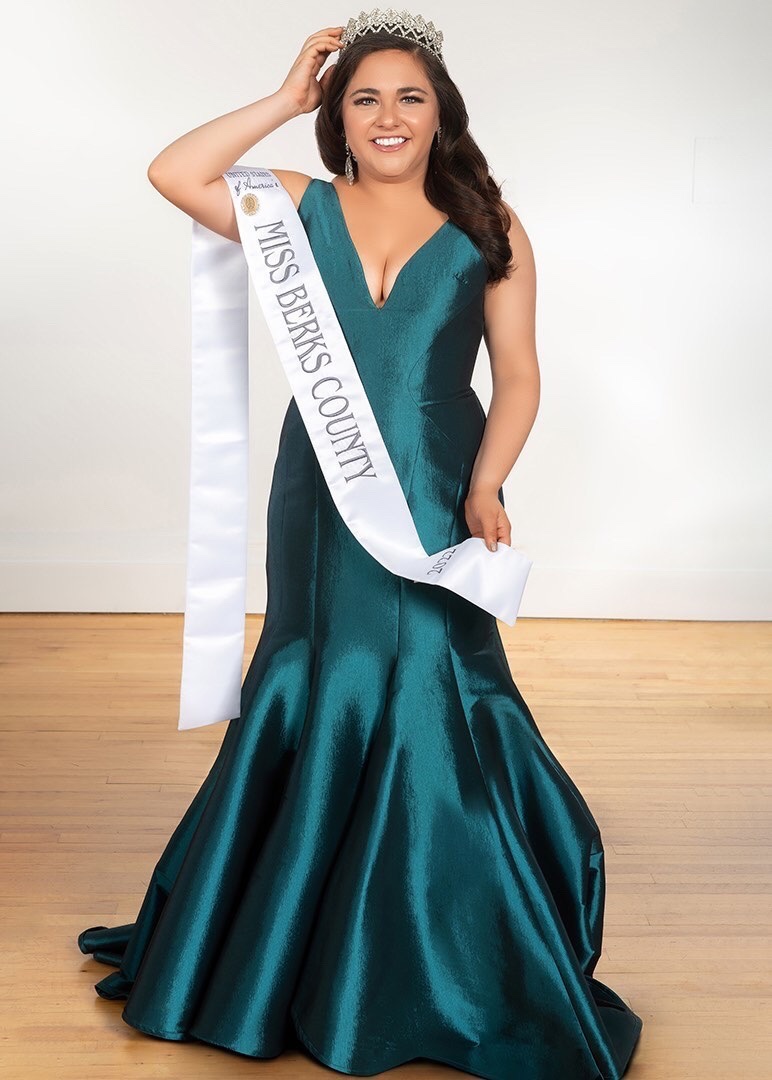
– Jenna Martorana, USOA Miss Berks County 2022

Caroline’s Story

“NEDA week is here! My mental health and my eating is something I always struggled with. Growing up I don’t remember many parts of my childhood because I have mentally blocked out the times I struggled. Growing up I would always wonder, why me? Why did I have to fight what felt like this all alone battle with myself, my body, and my self worth. I don’t deserve this. It came down to always needing to be more, be better, feeling like I had no worth and a craving to be loved.

I will never forget something that a family member said to me when I was ten. I remember the exact clothes I was wearing, my family member in the car, and the exact words they said, ‘Caroline, It looks like you have gained some weight.’ It might not mean anything hearing those words to some, but for me as a perfectionist, It struck me so much.

I thought about what I was eating, I didn’t know that there were other factors such as growth spurts that could be happening during this time. I was so sad. I felt as though the media portrayed gaining weight as always a terrible scary thing so when I was told I had gained weight, I went into full panic mode. I didn’t say anything on the outside; I kept it together, but on the inside I was mad at myself.I felt like I was a disappointment and I had failed my family on gaining weight, but why did I feel that way? At what point do kids learn that gaining weight is such a bad thing. I honestly was so small I needed to gain weight, but I looked at it as a failure. I was so disappointed in myself. Unfortunately, at ten, this was just the start.

Anorexia and many other eating disorders for me personally had little to do with wanting to be small, but everything to do with not feeling good enough, comparison, and not being happy with something about myself on the inside.

It turned into throwing away my lunch everyday, drinking only water, hiding food, working out all day long, and counting every calorie. I worked out all day and did not go out to do things with friends. I went for a normal check up and the doctor sent me straight to the emergency room because my heart rate was in the 40s and 30s overnight. I was hospitalized. That was only the first time. This was all because of one negative comment I battled for 10 years with an eating disorder. In and out of hospitals, therapy, I wasn’t allowed to do any activities, had to use a wheelchair to go anywhere, messed up my organs and heart, all because of the FEAR of gaining weight.

It’s a struggle to find recovery, it really is. It isn’t easy, but finding your worth, loving yourself, and finding yourself is so worth it. I love my body now! Do I compare myself; yes! Do I have bad days; yes! But I know my strength and self worth. I finally love myself for who I am. I try to be active, I try to be healthy, but I also try to find moderation. I find passion, remember I am loved, listen to my friends and family that love me. I know my self worth. I have come so far and I am so proud of my body, all it does for me, and everything it has been through. I want to treat it right because at the end of the day, it is all we have so we have to treat our body as the temple it really is.

Triggers still haunt me when I come home and visit my family. The control I see from my mom on what I eat, when, commenting on my weight gain, how I need to lose weight, not to eat my favorite foods, it still causes me anxiety and makes me want to relapse. But I am strong, I am brave, and I will always know my self worth if I gain or lose weight and regardless of what my family may say about me. It still hurts but I am strong.

If you think you need help, don’t be shy. It is so worth getting help than wasting away the best years of your life to give to your eating disorder. An eating disorder isn’t an embarrassment or makes you have less worth. It is something to be so proud that you overcame and made you a survivor. I am proud that I overcame my eating disorder and it has shaped me into who I am today. Be kind with what you say to your children, friends, and family, you don’t know how it can affect others. Lets stop obsessing as a society about how we or others look and instead appreciate and listen to how we FEEL! Let’s stop the obsession with being skinny and instead focus on being healthy. Do what is right for your body. Health has no exact weight.

You got this and no matter what they say, know your self worth and don’t forget it. Remember your lowest lows, and your highest highs. Life goes on, it does get better, and you can overcome your eating disorder.

I know that I am worthy at any weight regardless of what others may say and you are too.”

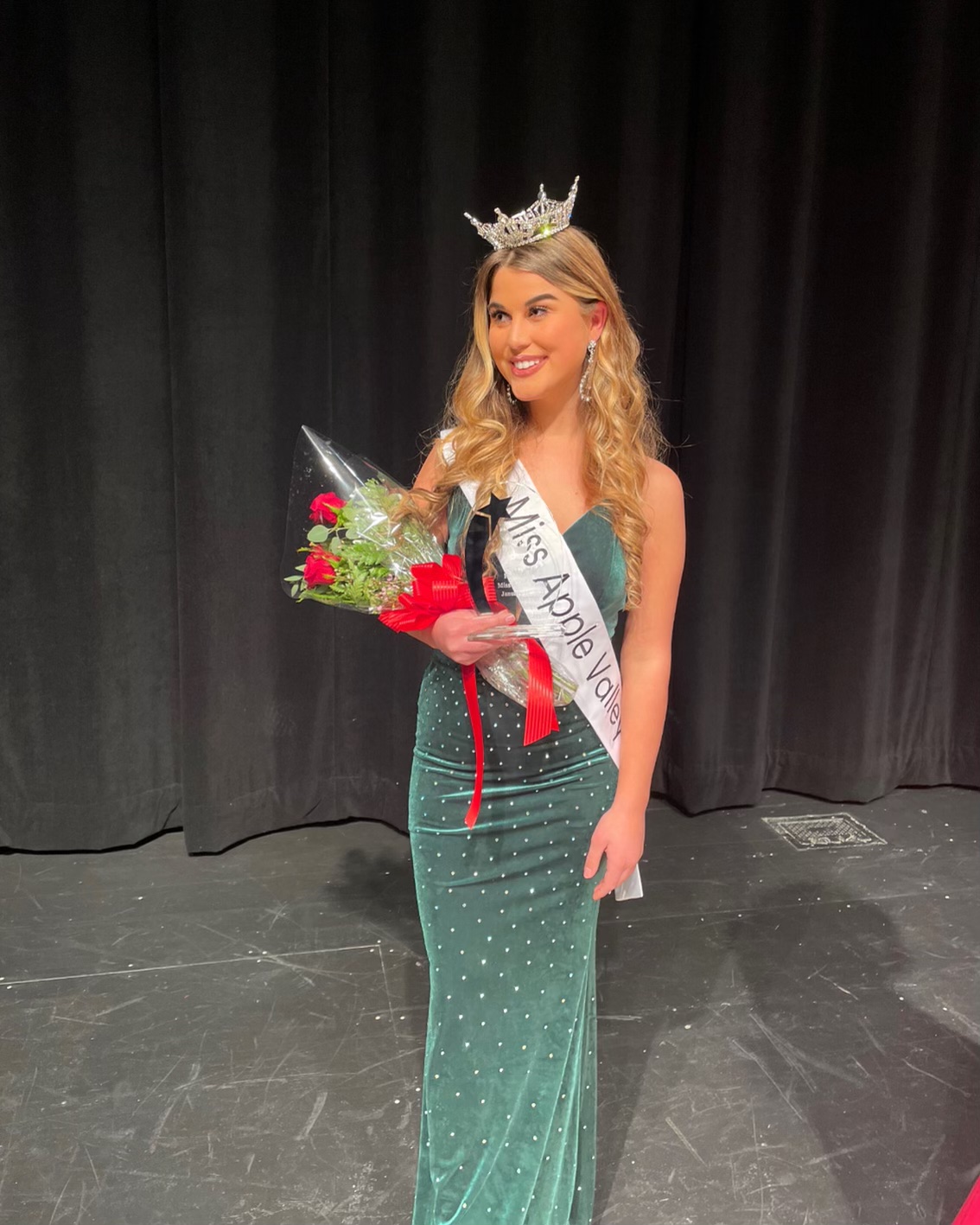
– Caroline Betty Trennepohl, Miss Apple Valley 2022

Katie’s Story

“My struggle with body image and an eating disorder started the summer before my sophomore year of high school. I had always been conscious of my body and my weight, but the summer before my sophomore year I really started to get into theater. This meant I was constantly getting measured for costumes and being put on display much more. I thought that the smaller I was, the more worth I would have.

At this point I picked up very restrictive eating habits. I remember eating a salad or granola bar for a meal. I felt embarrassed to be seen eating in front of others. I would purposely be go, go, go so I wouldn’t have time to eat. Once I got back to school and people started to notice I wasn’t eating all that much I started to do better and restrict less. All of my progress went down the drain when COVID hit.

I then turned to binging and purging. I got to a point where I would throw up after almost every meal I ate. Throughout the waves of my eating disorder I was calling out for help, but anytime someone tried to give me a good solution or truly help me, I wouldn’t listen. I knew what I was doing was wrong, but I wanted to be “beautiful.”

As my senior year approached I was throwing up less and less, and stopped hanging out with people who made me feel worthless. My mentors and my family were becoming more aware and helping me as well. As a singer I knew that I needed to stop my bulimic tendencies.

I can remember the exact day I stopped making myself throw up. January 31st 2021.

That doesn’t mean I haven’t thought about doing it since that time, but I have never purposely made myself throw up since then. My senior year I shared my story with freshman girls and that honestly helped my recovery so much. I knew that I had to be strong not only for  myself but for those girls. Though I still fall prey to diet culture from time to time and have really hard days, I have not fallen back into that dark place I once was. I have my amazing family and boyfriend to thank for that. They keep me accountable and make sure that I know I am beautiful just the way I am.

– Katie Farr, Miss Southern Missouri 2022

January 11, 2021: One Year Ago Today

“Hi can you help. I kinda really wanna die. I just drove 85mph on the wrong side of the road.”

I sent that text to my therapist on January 11, 2021. Now on January 11, 2022, I’m here to talk about it.

Being a mental health advocate, I’ve talked about suicide awareness and education, but have never shared my personal experience with it. Like many people, I noticed my depression really started during Covid isolation. The summer of 2020 was a rough one. The spring semester had to be finished online, businesses were closed, and friends stayed home. There were many days when I couldn’t get out of bed. Per my treatment team’s recommendations, I started taking antidepressants. They had been suggesting them for awhile, and I finally gave in.

Living with mental illness has good days and bad days, and depression is definitely an example of that. During the fall semester of my senior year, there were a lot of great moments, but the depression was always there. I don’t remember exactly when, but I had even started self harming. I was burnt out on school, Covid stress was very apparent, and I had just lost my Dad a few months before. My treatment team was doing everything they could to help, and we decided we needed a new plan – which involved changing my major.

I was majoring in music education, with a plan to student teach in the spring. I had a lot of anxiety surrounding student teaching, because I didn’t want to be a teacher anymore. I didn’t know what I wanted to do instead, so I was planning to stick it out. That’s when I was introduced to Dialectical Behavioral Therapy. My therapist, as well as other clinicians in Columbia, lead a weekly skills group covering all of the DBT skills. The goal of DBT is to create a life worth living, which was something I clearly needed. The DBT group met on Mondays from 9-11, and was approximately a 6 month commitment. The problem was there wasn’t a way to make it work with student teaching, so I was left with a tough choice. My wonderful professors found a way to make it work to attend group and still graduate in May. I changed my major to Interdisciplinary Studies with an emphasis in music and education. I would no longer be student teaching, but had a few classes to take to fill the IDS requirements.

I changed my major to save my life.

Flash forward to January 11, 2021. I had been in DBT for a few weeks, and was beginning to learn all the skills under the 4 modules (mindfulness, emotion regulation, distress tolerance, and interpersonal effectiveness). While I was learning a lot, I wasn’t at a place yet where I could integrate the skills on my own. My therapist offered 24/7 “coaching” to help me choose and use the correct skill during a stressful moment. That day I had spent the morning at a piano lesson for my senior recital. I didn’t have much access to a piano over Christmas break and my recital was coming up fast, so I was extra stressed. That night I attended Celebrate Recovery and even talked to some of the other members about how upset I was. On the drive home I couldn’t take it anymore. My brain was going a million different directions and I couldn’t regulate it. I was feeling hopeless and overwhelmed. I started speeding up. I went into the other lane, going faster and faster. I just wanted the pain to end.

I don’t really remember what made me come back to reality. I just realized that I didn’t really mean what I was doing, my brain was just overwhelmed. I came back to the right lane, slowed down, and drove the rest of the way safely. When I arrived at my destination, I texted my therapist and told her what happened. I was scheduled to see her and my psychiatrist in the next few days before heading back to school. We talked through what happened and established a plan to keep me safe. A few days later, my psychiatrist increased my medicine. The suicidal thoughts didn’t vanish, but I learned the skills to manage them and cope safely.

My therapist and psychiatrist knew what was going on, but not many others. I was too afraid to say something. I was too afraid of judgment. Everyone has stress in their lives and I didn’t want to contribute to that. I didn’t want anyone to worry.

I’m not afraid anymore, and I’m ready to speak out. Things haven’t been perfect since that day, and they never will be. Living with depression is a daily struggle. But thanks to learning my DBT skills, balanced medication, and a lot of work, I have found that life is worth living. There are moments that are hard, but I remind myself of all the things I’ve learned, and I keep going.

My story has a happy ending, but so many don’t. I’m going to do everything I can to create more happy endings.

If you are struggling, there are a few things I want you to know:
– Reach out. I chose to reach out to my therapist, but if that is not an option for you, reach out to anyone. Find a safe person who loves you. If you don’t know who to reach out to, I will be your safe person.
– Feelings are temporary, and you won’t feel like this forever.
– Take it one day at a time, one moment at a time.
– Remember that life is worth living, and I’m glad that you’re here.

What to do if someone in your life is struggling:
– Have honest conversations with them. Let them know that you care about them and want to help.
– Help them find additional support (therapist, medication). It can be overwhelming to reach out, so having someone to help start the process can be such a relief.
– Take care of yourself too. You can’t take care of someone if you’re not taking care of yourself.

Suicide Hotline: 800-273-8255

2021: Creating a Life Worth Living

Hi friends. One of my goals for 2022 is to blog more. So let’s kick that off with a 2021 recap! Last year I gave a short recap of each month, but this time I’m going to mix it up. In my most typical fashion, here are some lists to sum up 2021.

Shows I Binged: Reputation Stadium Tour, Relentless, Superstore, Great British Bake Off , Bob’s Burgers, Masked Singer, Friends

Music (+ a podcast) I Listened to on Repeat: Taylor Swift, Chicago the Musical, more Taylor Swift, Morbid Podcast, Taylor Swift

Pages I scrolled through late hours in the night: Duggarsnark, various subreddits about aquariums ( I discovered Reddit)

Nintendo Switch games I spent too many hours playing: Animal Crossing, Stardew Valley

Places I went: Disney World, Tampa, Chicago, St. Louis, Mexico (Missouri, lol)

Big Moments to remember: Performed my Senior Piano Recital, collaborated with Miss America titleholders from around the country to raise awareness about mental health, turned 22, graduated college, had the best week at Miss Missouri, played in my first pit orchestra for a musical, discovered how much fun it is to mow the yard, broke my “No Dating Ever Again” pact (worth it), moved into my first apartment with a full time job, won Miss Columbia, adopted more fish babies

Biggest thing I Learned: How to create a life worth living (shoutout to Dialectical Behavioral Therapy)

As with every year, 2021 had its ups and downs. As I look back, I don’t have any regrets. Each moment in the year was an opportunity for growth and new experiences. What else could I ask for?

Now looking into 2022, there are a lot of unknowns. I don’t know where I’m going to live when this lease is up. I don’t know how long I’ll be at whatever job I may have. I don’t know where I’ll travel or what shows I’ll binge. But there is one thing I do know: I will be okay. You will be okay.

I don’t know about you, but I’m feeling 2022 🙂 (Sorry, I had to)

Unnecessary Guilt Into Necessary Gratitude

“This is my cheat day, the diet starts tomorrow”
“I’ll have to work out all weekend to work this meal off”
“I haven’t eaten all day to prepare for this meal!”
“I’m going to be so bad and have dessert”

When did Thanksgiving go from a day of thanks and gratefulness to a day of regret and guilt? It’s funny how a day focused on gratitude is also full of so much negativity. And the majority of people don’t even notice. It’s become completely normal to start the most thankful meal of the year with negative comments about food, weight, and bodies.

This Thanksgiving, let’s turn the unnecessary guilt into necessary gratefulness.

But, how?

Reframe Negative Comments – From Yourself and Others
– When one of those dreaded diet culture comments pops into your brain or out of someone’s mouth, shut it down as fast as you can. Remind yourself and those at the table that there is no such thing as “bad” food. You don’t have to punish yourself with working out. Your body receives necessary nutrients from every single food. No matter the carbs, sugar, protein, or fat, your body is thankful for the opportunity to provide you with energy.

Listen to your Body
– I don’t know what it is about Thanksgiving that gives people the right to comment on everyone else’s eating habits, but this is your reminder that you don’t have to listen to them! Eat what you like. Eat what sounds good. Eat seconds if you want. Stop when you feel satisfied. Thanksgiving foods are always available. You don’t have to skip breakfast to eat as much as you can at dinner. You don’t have to eat more than your body wants just because those around you are insisting on it.

Thanksgiving is just one day a year. Spending the day feeling guilty about your food choices is unnecessary. Spending the day being grateful is necessary

Of course I’m grateful for all of my friends and family. But I’m also thankful for recovery. I’m thankful for food that nourishes me. I’m thankful for my body that works so hard for me.

I’m grateful to make it to another holiday season, and I’m grateful for you.

Design a site like this with WordPress.com
Get started